Showing posts with label Thailand. Show all posts

Tuesday, September 23, 2008

Elephant Nature Park Chiang Mai

Probably the highlight of my trip to Thailand.

Elephants have been a very important figure in Thai history, helping in agriculture, work and in general to develop the country. Nowadays they are used mainly for touristic reasons. You can go an see them working with logs of wood, or even painting with their tusk. Or you can ride them on an organised jungle trek. However here are some reason why you should NOT DO these activities.

Working and painting elephants are usually trained in extremely painful ways, since they are babies. The way they are trained is by being poked with stick with nails at the end when they don't follow orders, and being their skin quite tough they get poked where it hurts: eyes and ears. They showed us a video at the Elephant Nature Park and it was painful just to watch it.
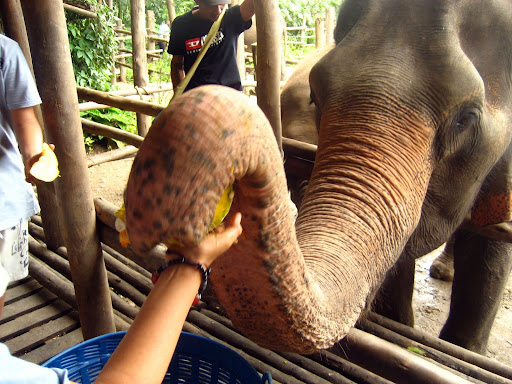
Feeding the Elephants "the proper way" at Elephant Nature Park

Riding elephants is not that bad, but the huge saddle they put on their backs to comfortably carry you around is quite heavy and uncomfortable for them, often leading to back problems (like in the case of the elephant Khun Min). On top of that they have to endure never ending shifts to support the tourists demand, and in worse cases they are trained like the “painters” elephants, sometimes drugged to endure long shifts and generally mistreated.

The worse thing you could do as tourist is support the cruel activity of bringing elephants to big cities as a tourist attraction by feeding the elephants on the streets of Bangkok or Chiang Mai. It doesn't take a genius to understand that the center of a huge, noisy and polluted metropolis is not the best environment for a baby elephant. If you look at these small elephants you'll see them rocking forward and backward at all times. A clear sign of stress. So once again don't support the people behind this business by buying overpriced bananas and sugarcanes to have a picture of yourself feeding them.

So what do you then at the Elephant Nature Park then? Well you spend a day simply.. hanging out with the elephants. Looking after them and learning all explained above and a lot more about these great creatures.

I booked online through the official website, saving on agency or hotel commission. They come and pick you up wherever you're staying. First stop then is a the fruit and veg market, where you browse around a bit before helping loading trucks with the elephants lunch. Would you believe they eat 250kgs of fruits and veg a day? I struggle with my 5-a-day!
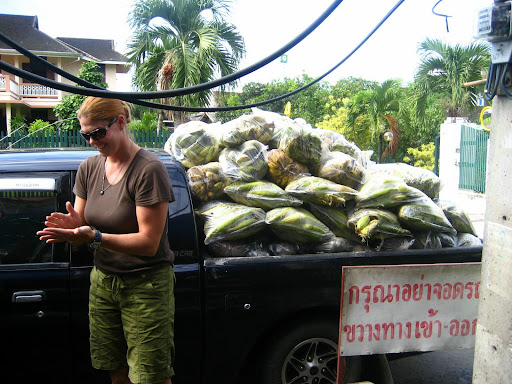

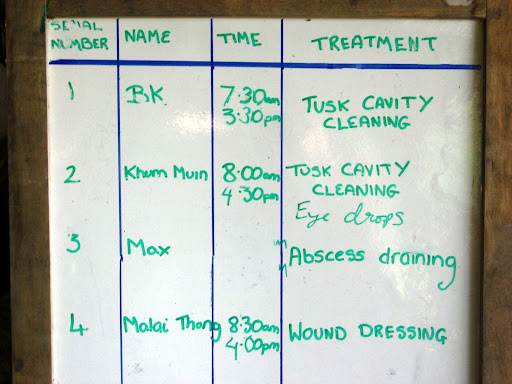
Then after a bit of a ride you arrive to the Park. The place is basically a sanctuary for mistreated elephants. While there you get to know them (personally), feed them (the proper way) and hear their stories (well, not from them). Some of them have a very rough past, and it's great to see them fully recovered and happy. The Elephant Nature Park acts like a hospital as well, curing the elephants from any injury their past owners gave them. Each day the workers and volunteers (yes you can volunteer and spend a week or two there) have a list of tasks to do, like disinfecting injuries or administrating eye drops.

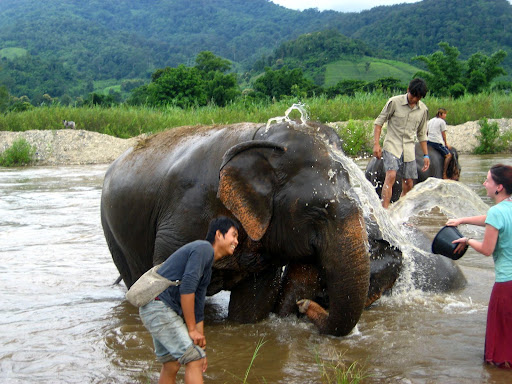
After a delicious lunch (worth the entrance fee alone) comes the fun part: everybody down to the river to bath the elephants. Inevitably, due to the kids around, the heat and the fun atmosphere, there will be some kind of water fight.

During the day you'll also meet Lek, the founder of the Park. Make sure to get a chance to chat to her. Lek is an extraordinary woman indeed (2005 Time Magazine 'Asian Hero of the year'). She's tiny, but radiates her passion and strong will like an aura around her. Lek also started a project related to the Nature Park. It's called Jumbo Express and consist of rescuing and giving medical care for elephants in remote areas. Part of your admittance fee (which is a bit more expensive than other tourist elephant activities, but indeed worth every penny) goes to the project.


When the time comes to go back to your accommodation (and that is after a second bathing session and watching a documentary about the cruelties elephants still endure in Thailand) you'll be sorry to leave such a oasis where people and nature co-exist so well. And maybe you'll even consider going back to spend a few days there (accommodation available) or even to volunteer there. I did consider it as well, but then forgot that I could only stay 30 days in Thailand with my visa. It was time to go back to Bangkok, and after a few days there fly to Singapore.

Read more about my Adventures in Chiang Mai or Bangkok...

Thursday, September 11, 2008

Chiang Mai: A Guide to Avoid Tourist Hordes

For many Chiang Mai is the second Thai must see destination after Bangkok; at least if you're on a cultural trip rather than a sun & beaches trip. It sounds intriguing indeed, with less stress, traffic and confusion than Bangkok, and many temples (30 just inside the small old city) to be visited. The countryside, with tribe villages, jungle treks and rivers to explore bamboo rafting are just outside town too. Altogether a real picture of “life in Thailand outside the Bangkok metropolis”.


Well I can say that definitely many people go there. I wasn't really able to fully enjoy the magic of the place, feeling at all time a tourist between the tourists. Many of them were the worse type: huge groups in all-organised tours, or Lonely Planet worshipers. I don't think I've ever seen so many guidebooks in one place and time. Honestly, these people wouldn't step a meter further without consulting their guidebook. They didn't have the guidebook in their bag, opening it at a crossroad or in front of a temple. The guidebook would be always, constantly in front of their face, often covering the real sights.


Many told me how until not too long ago Chiang Mai was not this popular and was a little paradise. I guess the two main culprits are the above mentioned guidebooks and a direct flight from Phuket, bringing the worse kind of tourist in town: the Phuket holiday makers, that now can tell their friends how their holiday was not only laying on a beach, they “saw a lot of Thai culture” too).

My main goal as a consequence became avoiding the masses of white flesh (definition borrowed from this interesting post) and trying to find some nice secluded spots. So here's my:

Guide to avoid tourist hordes in Chiang Mai

Night Market
One of the most popular spots in town. Hundreds of stalls selling basically everything, although mostly t-shirts and souvenirs; don't expect the variety of Bangkok street markets. Be there from 6 to 8, while the masses are having dinner. After 8 Spanish, Italian and French will be the only languages you'll hear, and it will be almost impossible to walk around.

Famous Temples
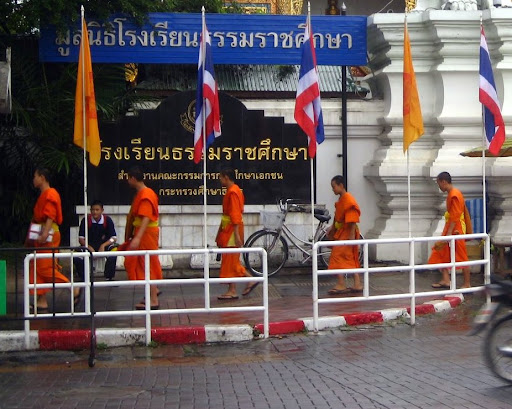
Yes, while you're there you want to see the most famous ones. Be there early in the morning (you can take beautiful pics of the begging monks going around town too), or choose a rainy day. Go, don't expect to be in an environment to contemplate the beauty of the temples or meditate, try not too have too many random tourists in your pics and leave.


Not Famous at all Temples
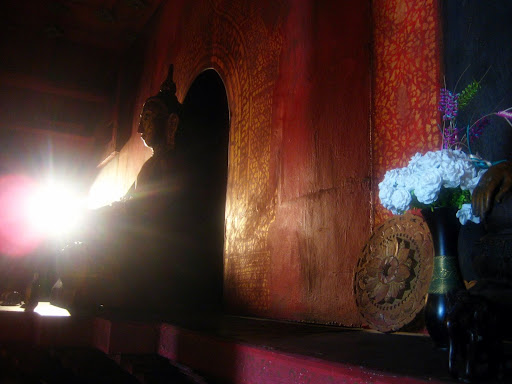
My favourite past-time. Start walking, at some stage get off the main road and get lost. Best way to find the odd temple with nobody in there. Nobody, sometime a dog or cat having a nap just outside. Not even the monks inside. All for you. Bless. Admire the Buddha statues, have a look at the paintings. Take your time. Sit down and have a bit of me time. You could even bring a book. And experience a Buddha smile appearing on your face thinking of the people fighting to take a picture of the “recommended” temple.

City Arts & Cultural Center
I would normally avoid museums. As Coelho said talking about travelling in his blog: “if you are in a foreign city, isn’t it far more interesting to seek out the present, than the past?”. This one is abit different. First of all it's an almost tourist free oasis. When I was there we were in all 5-6 visitors, scattered through many floors, baconies and verandas. The museum will give you a good insight on history, culture and significance of Chiang Mai. Plus a couple of very nice shrines.


Tours to typical villages (including Long Neck tribes)
Unfortunately to avoid most of them. Best case it's just a tourist trap. Some "be the first one to visit" villages are just a series of gift shops. Villagers are sometime exploited, like the sad case of the Long Neck Karen tribes; people who've been in the villages described it as a human zoo.

Dining
Loads of pretty girls calling you for food, drinks and company on the main road. They say "welcome" like if you were already in (while it's clear you have no intention to go in) and offer the best burgers and pizzas. No thanks. Find a local with a good menu with lot of things to try out, and no girls calling you. Stick to the place. After a few times you'll become a local, and it's nice to chat to the staff, see how they see the world, and what is it like to live in Chiang Mai. Some old expat might be around too, usually with better English than the residents and the vision of someone who has not simply seen but lived in both East and West of the world. Usually a good chat.

If you're going to Chiang Mai I hope this little guide is helpful. If you're just following my adventures.. well that's how I did it folks!

More Thailand stories coming soon, so come back or even better Subscribe by RSS or by Email...

Saturday, September 6, 2008

Bangkok Ancient City: Muang Boran

The Ancient City, or Muang Boran in Thai, is a relatively little known park dedicated to preserving and promoting the cultural heritage of this country. Located 50 mins driving from the center of Bangkok the best way to get there is by taxi, but of course you have to make sure that the taxi meter is working. In my case only the third taxi “happened” to have the taxi meter working, so the cost was around 300 Bahts; 6 euros one way for a 50 minutes drive, not too expensive really.


The park is a collection of important buildings and historical places from all over Thailand. Even the shape of the park itself resemble the elephant shape of Thailand. There are all kind of temples, stupas, monuments, statues, and many of them on water, just to get that extra beauty effect from your pictures.


The bad news is that everything you see is a replica, and having 109 of them after a while you get used to them, so only the most spectacular ones will catch your attention at the end.
Plenty of good news however: a stroll through the Ancient City will give you first of all a good idea of Thai history and architecture, especially if you don't have time and money to go all over the country. Even better, the park is an incredible quiet and relaxing place; even if you're not into Thai history or architecture is a great chance to get on your bike (provided with the admittance fee) and wander through the 320 acres of the park, stopping whenever you feel like at one one of the many stalls inside for a coffee, drink or lunch.


Almost no cars, (after witnessing a massinve traffic jam in a pedestrian area I wonder if there is a place in Thailand with no cars at all), not many tourist as the place is not well known and away from the city anyway, plus the aforementioned monuments, beautiful lakes, bayan trees, frangipani, and in some areas even deers and strange rugby ball shaped turkeys.


Depending on how long you spend in Bangkok and how much you enjoy noises, traffic, smog and pollution, you might find the Ancient City Park a little slice of paradise.

Read more posts about
Bangkok..

More Thailand stories coming soon, so come back or even better Subscribe by RSS or by Email...

Tuesday, September 2, 2008

Tiger Temple, Kanchanaburi

A good 3 hours by bus from Bangkok is the Kanchanaburi province.
Two of the main attractions there are the Bridge on the river Kwai, famous for sad historical reasons during WWII and the Tiger Temple. The Bridge (and related museum) on its own wouldn't be worth the trip in my opinion, unless you have personal reasons to visit it or you're a big fan of the 1957 famous movie.


The Tiger Temple it's a quite controversial topic. What I knew was that the Buddhist Temple looks after tiger cubs that are orphan or rescued from poachers. The tigers grew up in the temple, and thanks to the monks patience and love they are now accustomed to humans, docile and approachable. You pay a small fee to enter, and a not so small fee if you want (and have the courage to) get very close to them for pictures together. The money however it's all for a good cause, as it will allow the tigers' conservation, and will ultimately provide a Forest Monastery where they can be protected and roam free as they should.


Flicking through an old Lonely Planet guide in my accommodation in Bangkok (I don't use them, actually boycott them, but was curious to see what they said) the Tiger Temple is not only not endorsed there, but readers are discouraged to go there. I took it as an excellent sign. Must definitely be a great place.

So I was quite surprised upon arrival at the Temple to see so many buses and mini-vans parked outside, and so many tourists hanging around. The Temple is now a sanctuary for all kind of animals, so as you enter you see wild pigs, deers, chicken, buffaloes, etc all roaming free together (and with people around) in harmony. Nice, like a Buddhist Garden of Eden.

As you approach the Tiger Canyon, the area where the tigers go in the afternoon to sunbath and take their after lunch nap (and as a consequence the best place and time for visitors to approach them), the first thing that strikes you is a gigantic file of people, all queuing to have a sight and a picture of the tigers. Good news is that if you're willing to pay the extra fee you can skip the queue and have a personal photo shoot with your camera getting very close to the tigers, patting them and even having them on your lap. As you can see from the pics I went for that option, considering that the queue was at least one hour long, and the place was closing in 30 minutes, but mainly keeping in mind that the money is all for a good cause.


That's not the end of the story though. My main inspiration to visit the temple was a website created by two guys who volunteered there. The website explains even better than the official Temple website the philosophy behind the temple, the good causes and the hopes for the tigers' bright future.

Checking back on the website just after few days from my visit to the Temple there was an update. It looks like the Temple by now should have the money for the New Home for Tigers, considering also how popular it got lately. It looks like while before tigers would be left alone if they didnt feel like human company and pictures, now they are forced to perform, a consequence I imagine of the long queue of paying tourist who don't want to be disappointed. It also looks like there cannot be a never ending stream of orphaned cubs, so the Temple must have some other way to get the tigers. And there is also an investigation by Care for the Wild.


Based on the latest news I don't feel like recommending the Tiger Temple anymore. It was great to have tigers on your lap, feel their breath, their muscles, weight (!) and power, but at the same time for the whole length of the visit it felt a bit unnatural, and definitely touristy.

The official proof? Checking on the latest version of Lonely Planet the Temple is now highly recommended!! Avoid.

Related posts:


Bangkok Floating Market : Damnoen Saduak

Bangkok Street Markets and the Art of Bargaining

Bangkok, Attack to Senses

Wednesday, August 27, 2008

Bangkok Floating Market : Damnoen Saduak

A visit to the Floating Market is still a must while in Bangkok.


Yes, it's no longer the old traditional market, as now it's more tourist orientated. And it is full of tourists. Still the ratio tourists/local people is not as bad as in some temples or other attractions. You still see a lot of locals buying fruits, vegetables and other stuff from seller on long narrow boats. And although is a less "spontaneous" event now, it is still a great way to see the old style and traditional way of selling and buying on canals.

Located around 80kms away from Bangkok you can get there by car, bus or more easily on one of many mini-van tours, often combining it with the Rose Garden, or the bridge on the River Kwai.

Once there despite the tourists you will really feel like you travelled back in time, and it is a photographer paradise indeed. I have a simple compact digital camera, and still I'm pretty happy with some of the shots I've taken. So let's have the images speak for themselves:


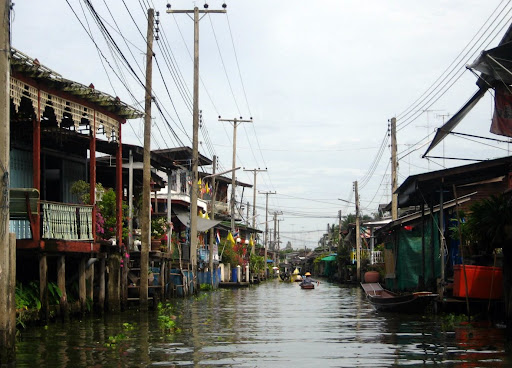
And while you're there make sure to take a long boat to explore the canals away from the market, they go on for miles and miles, no tourist to be seen, but instead real houses, shops and people still living there.


Happy Floating!

Wednesday, August 20, 2008

Bangkok, Attack to Senses

As you arrive Bangkok will deliver a total attack to all of your senses. It might takes a few days to get over it. But once you do you'll really enjoy the fascinating complexity, controversy and variety of this metropolis.

As generally we refer to the five senses I'll try to describe the sensorial attack according to these senses.

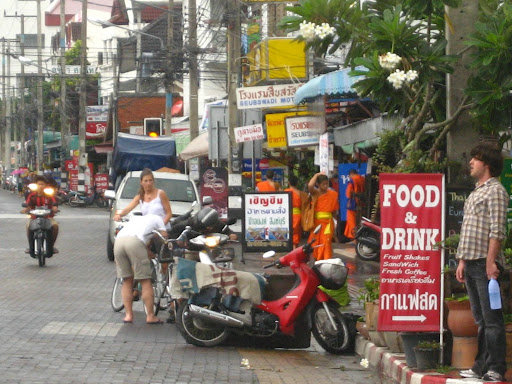
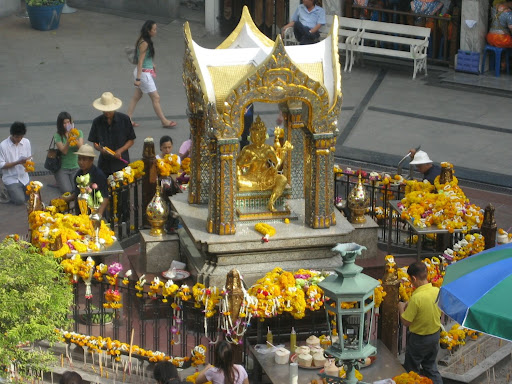
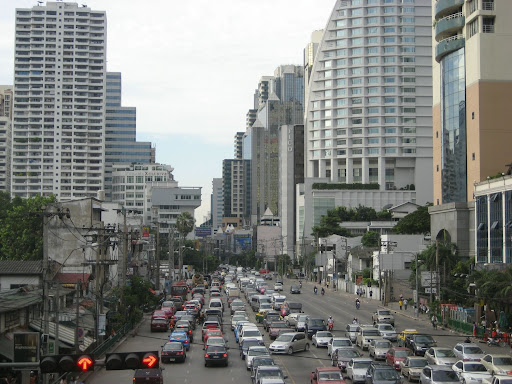
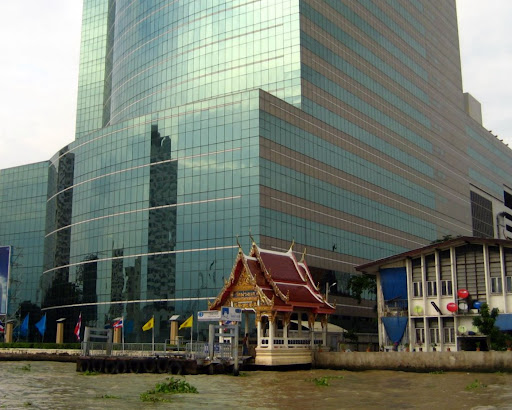
Sight. The grey of the sky, mixed with the concrete-grey of hundreds of skyscrapers, roads, elevated pedestrian bridges and elevated train tracks. This prevalent grey contrasts with the gold of temple and shrines, with the colorful taxis and tuk-tuks, and at night with the thousands colorful neon signs.

Smell. The smell of food from the stalls mixes itself up with the warm stink coming up from the sewers you're walking on concealed as foothpaths; add a quite high amount of pollution as well. One moment you're filling your lounges with the gorgeous smell from the stalls (almost feeling hungry again), one moment you have to cover your mouth and nose and quickly move on.

Hearing. The noise from cars, tuk-tuks and their horns; trains, traffic wardens and their whistles; every seller then try to attract attention with some kind of noise: bells, horns, wooden frogs, clapping their hands, and calling you of course.

Touch. When you think Touch your hands usually come into your mind. The tactile aspect of Bangkok involves all of your body: the heat wrapping around you like a blanket, sweat making you all sticky, and then, when you're almost getting used to it.. Bang! The freezing air conditioned of a bar, shop or train, or the polar environment of a shopping center.

Taste. Do we have to mention the amazing taste of Thai food? A couple of things to mention though:
- Hot Hot Hot. Not really a surprise. However, being used to Indian spiciness i was surprised how much Thai food can burn in your mouth; while with Indian food you feel the heat gently but unstopping glow inside you, with Thai food you feel the heat straight in your mouth.
- Fruits. An amazing variety of new super-tasty fruits like rambutans, longans and mangosteens between the others.


The concept of concrete jungle really applies to Bangkok: in the real jungle the strongest will survive, and often the strongest is the biggest, or more colorful, or louder. In the business-based concrete jungle size, colours and noises are important too. The stronger is often the one who can attract your attention most, in order for you to but their products/services. And like in the real jungle they use size (some huge shopping centres), colours (the neon signs) or (all kind of) noises to attract your attention.